Pages

Tuesday, 6 September 2016

St John-at-Hampstead Churchyard

St John-at-Hampstead Churchyard, Hampstead, North London
Visited June 2016

Hampstead always feels more like an English country village than a part of the sprawling London suburbs, and this churchyard (and its extension) do nothing to change that.

Go along Church Lane, and the church and old churchyard is on the left hand side of the road, with the extension (opened in 1812) across the road. Parts near the entrance to the churchyard are well manicured, the rest is a bit more overgrown and nature abounds – squirrels in particular – as the two sites are Sites of Nature Conservancy Interest. Most of the graves are from the 19th century, up to the 20th century in the newer part, although there are some older ones dotted around.


There are some well-known burials in the churchyard, in particular the tomb of the artist John Constable. Also, look out for the grave of a local Pearly King and Queen in the extension. I could write lots more about the site and the burials, but this lovely article in the local paper, the Ham & High, tells it better than I could: http://www.hamhigh.co.uk/news/heritage/hampstead_parish_churchyard_tells_stories_of_those_who_matter_1_833317


Sunday, 4 September 2016

Mortlach Churchyard, Dufftown, Scotland

Mortlach Churchyard, Dufftown, Highlands
Visited August 2016

Mortlach church, on the outskirts of Dufftown (a town in the Highlands more famous for its whisky distilleries than anything else) is one of the oldest sites of continuous Christian worship in Scotland, with a church being founded here around 566AD. The current church dates to the Victorian period, but apparently contains older memorials from former churches on the site. Sadly the church is kept locked outside of services, so I wasn't able to view these.

The churchyard is mainly 19th and 20th century, and has been extended to a cemetery down the hill from it. There are a few older gravestones, and in the lower part of the churchyard there is a Pictish stone known as the Battle Stone - you need to visit when the light is good to see it properly, I didn't and so can't say first hand what's on it! There's apparently also one inside the church, along with a stained glass window showing Pictish beasts.

In the churchyard there's a 19th century watchman's hut, built so a watchman could guard recent burials from grave robbers, although it's locked up now - hopefully those services are no longer required!


Saturday, 3 September 2016

Camberwell Old Cemetery

Camberwell Old Cemetery, Southwark, London
Visited July 2016

I've visited Camberwell Old Cemetery before and not been very complementary about it, but this time I decided to venture a bit off the beaten track into the overgrown areas, and it's lovely! You can't get off the tracks very much as it's all overgrown and bits are fenced off for Japanese knotweed removal. There are plans afoot to try to clear some of these areas for new burials, which is a disgrace, surely. The wildlife, the history, the people who are buried there - all of these deserve to be left alone, rather than be swept away for a money making scheme, which is all this can be.

Anyway, if you're in the area I highly recommend that you head down some of the tracks into the woods. I didn't see anyone else while I wandered, despite the cemetery being on the Green Chain, and it was a spot of complete solitude. Lovely.


Saturday, 20 August 2016

Tarves Kirkyard, Aberdeenshire, Scotland

Tarves Kirkyard, Aberdeenshire
Visited August 2016

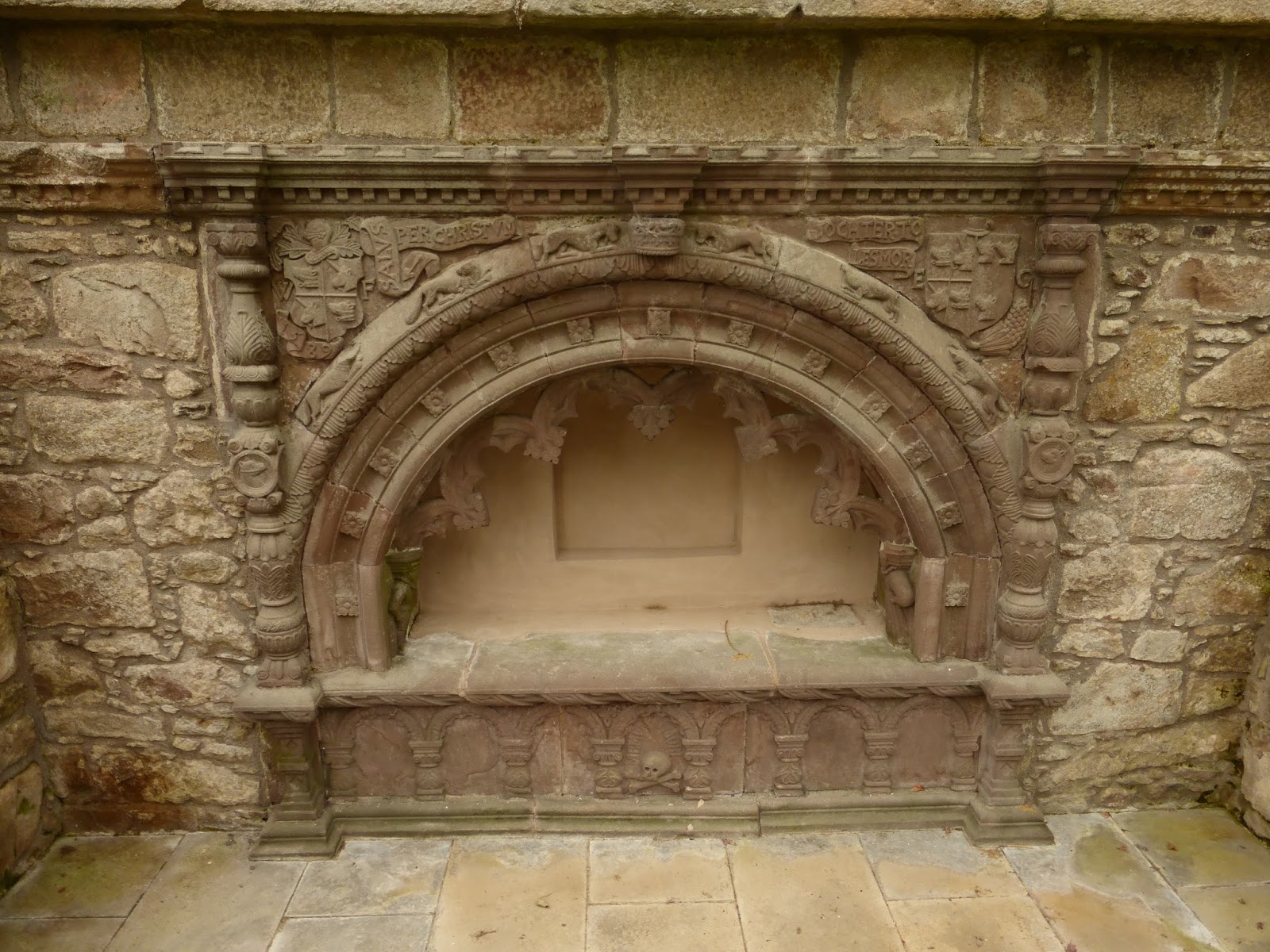
Tarves is a small village a few miles north of Aberdeen, with a most impressive tomb in its churchyard. Most of the graves date from the Victorian period onwards, and the church itself dates from 1798, but the site has been in use much longer than that. A Medieval church stood just to the south of the current one, and all that remains of it is the Tolquhon Tomb, a scheduled ancient monument and the tomb of William Forbes (died 1596), lord of nearby Tolquhon Castle (the ruins of which are also well worth a visit), and his wife Elizabeth Gordon.

The tomb itself is under a protective canopy, and you can't get right up to it, but it's worth seeking out, especially to see the carvings on it - although you can't quite see the small portrait statuettes of th couple. The design of the tomb is probably inspired by the 1532 tomb of Bishop Dunbar in St Machar's Cathedral in Old Aberdeen.


Leaning against the church wall, directly behind you from the Tolquhon Tomb, are 4 old grave slabs dating from the 1580s to 1630s, with wonderfully naive skulls on them, and inscriptions which remain legible to this day.


Saturday, 13 August 2016

Gravestones of Sandwich, Kent

Various churchyards around the town of Sandwich, Kent
Visited August 2016

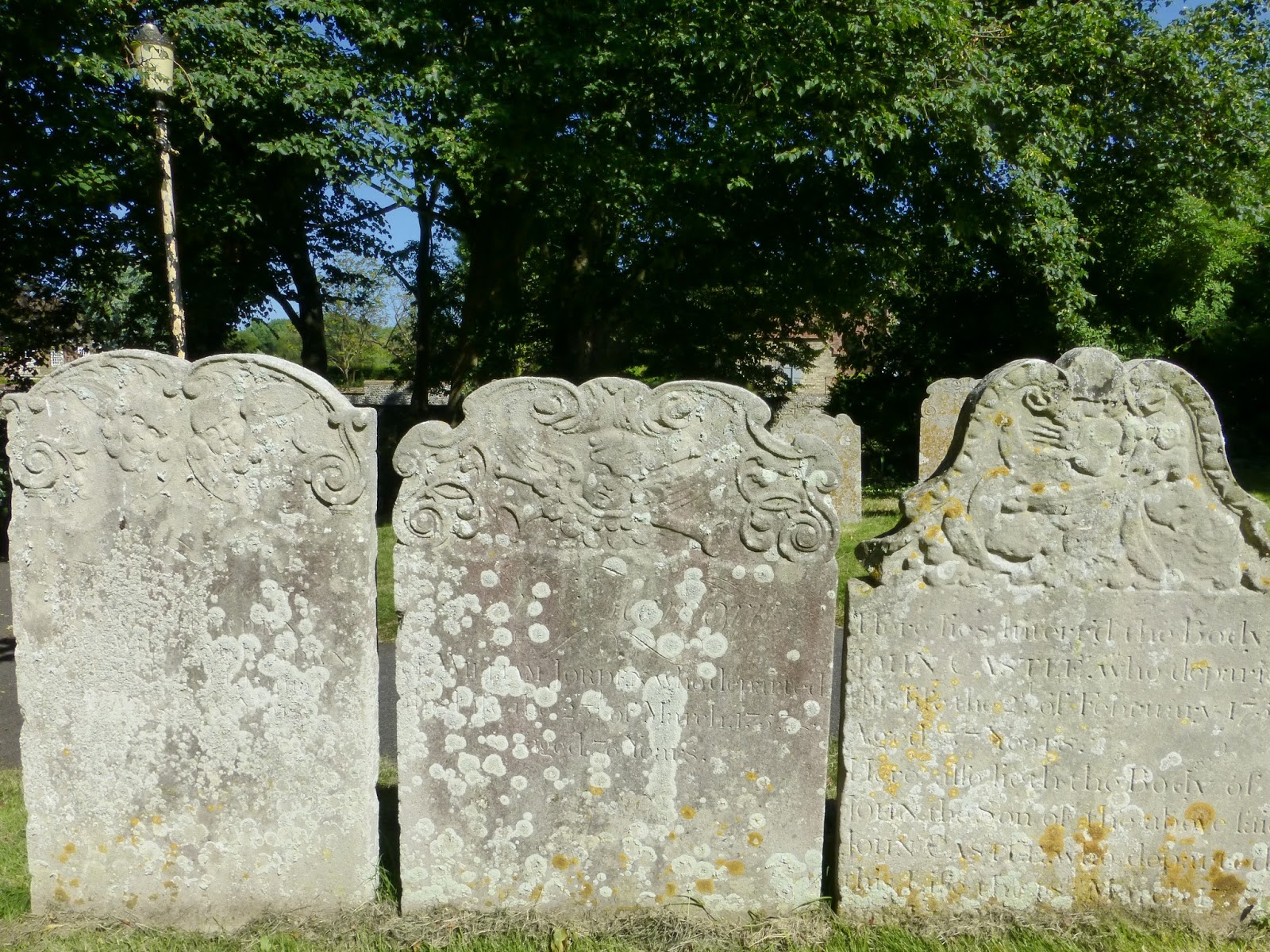
When I was wandering around the pretty little town of Sandwich the other weekend, I stumbled across some lovely tombstones. Sadly I didn't have as much time to poke around as I'd have liked, as Richborogh Roman Fort was my intended destination, but I spotted these few. Maybe I'll go back one day and have a proper look!

St Mary's Church
This Church is right on the street, but it seems to have a pretty churchyard behind it, with some fairly old stones including this one.

St Peter's Church
Most of this churchyard seems to have been cleared and landscaped, with the stones placed around the edge is so often the case. Just opposite the door, however, I spotted this little gem!


Parish Church of St Clement, Sandwich
This is a lovely churchyard - like a proper English country churchyard should be, and it helped that there was someone practising violin nearby, giving a very pastoral soundtrack! Graves seem to date from the 18th century onwards, and although I had only 15 minutes to look around I spotted some lovely ones and must go back sometime!


Friday, 29 July 2016

The Great Cemetery, Riga, Latvia

The Great Cemetery, Riga, Latvia
Visited July 2016

This lovely wooded cemetery is about 2km out of the centre of Riga, the capital city of Latvia. It's a pleasant walk or a short tram ride to get there, and on a sunny weekday morning there were a few dog walkers, some joggers and me there.

The cemetery covers 22 hectares, and was founded in 1773 (thanks to Russian legislation banning burials in churchyards in the early 1770s) before finally being closed to burials in 1957. Sadly, it was badly damaged during the second Soviet occupation (from 1944 to 1991), with a lot of monuments bulldozed in the 1960s when it was converted into a park. One well preserved area is the Russian Orthodox Cemetery, separated by a road from the main part of the cemetery, and now renamed Pokrov Cemetery (see separate blog post).

Many of the remaining monuments and mausoleums are in a poor condition, although there are signs of restoration work in some parts. Most interesting to me were the wonderful gravestones in the form of tree stumps, complete with roots, leaves and insects. I've never seen the like before!

Should you find yourself in Riga, and can tear yourself away from the sites of the old town and art nouveau district, I highly recommend you come here for some greenery and time out from the hustle and bustle.


Friday, 3 June 2016

Brompton Cemetery, London

Brompton Cemetery, London
Visited October 2014

A third (photographic) visit to this lovely Victorian cemetery in Kensington and Chelsea. Although quite busy with walkers, it's such an atmospheric place in black and white!